How Often Should You Change a 17x17x4 Air Filter?
By Makayla Risner | Published November 6, 2026 | Updated November 6, 2026
TL;DR
A 17x17x4 air filter lasts about 90 days in a typical home. In Boca Raton, where air conditioning runs most of the year, check it monthly and replace it every 60 to 90 days. Homes with allergies or asthma do better on a six-week schedule.
Most 17x17x4 filters need replacing about every 90 days. The 4-inch depth holds far more pleated media than a 1-inch filter, so it traps more dust before airflow suffers. Pets and allergies shorten it, and so does a system that runs nearly nonstop.
Key Takeaways
A 17x17x4 filter typically lasts about 90 days in a typical home.
Homes with shedding pets should plan on replacing it about every 60 days.
Allergy and asthma households do best on a six-week schedule.
In Boca Raton, a seasonal split works well: about 60 days from May through October and about 90 days from November through April.
The U.S. Department of Energy says replacing a dirty filter can cut air conditioner energy use by 5% to 15%.
How Long Does a 17x17x4 Filter Last?
A 17x17x4 filter lasts about 90 days under typical conditions. Its deeper pleats spread captured dust across more surface, so it goes longer between changes than a thin filter.
If other returns in your home use thin filters, this guide to the 25x25x1 furnace filter covers their care. Sizes such a 12x20x1 pleated filter, or a bulk 12-pack of 14x24x1 air filters usually need changing more often than a 4-inch filter, and a 17x17x2 MERV 8 two-pack falls in between.
The "17x17x4" label is a nominal size. Filterbuy, a U.S. air filter manufacturer that makes the 17x17x4 in MERV 8, 11, and 13, lists this size at an actual 17.0 x 17.0 x 3.63 inches, so I always recommend reading the size printed on your current frame before ordering.
What Is a Good 17x17x4 Filter Replacement Schedule?
A good baseline is every 90 days, adjusted for your household. The U.S. Environmental Protection Agency notes that manufacturers commonly recommend replacing HVAC filters every 60 to 90 days, and sooner if a filter looks soiled.
Typical home: every 90 days.
Shedding pets: about every 60 days.
Allergies or asthma: about every six weeks.
Renovation or post-storm cleanup: check every two weeks.
Filterbuy publishes the same pattern for this size: about 90 days in a typical home, two months with pets, and six weeks with allergies or asthma. It also sells a MERV 8 version of the 17x17x4, and readers in Canada can use the French-language Canadian product page.
How Often Should You Change a 17x17x4 Filter With Pets?
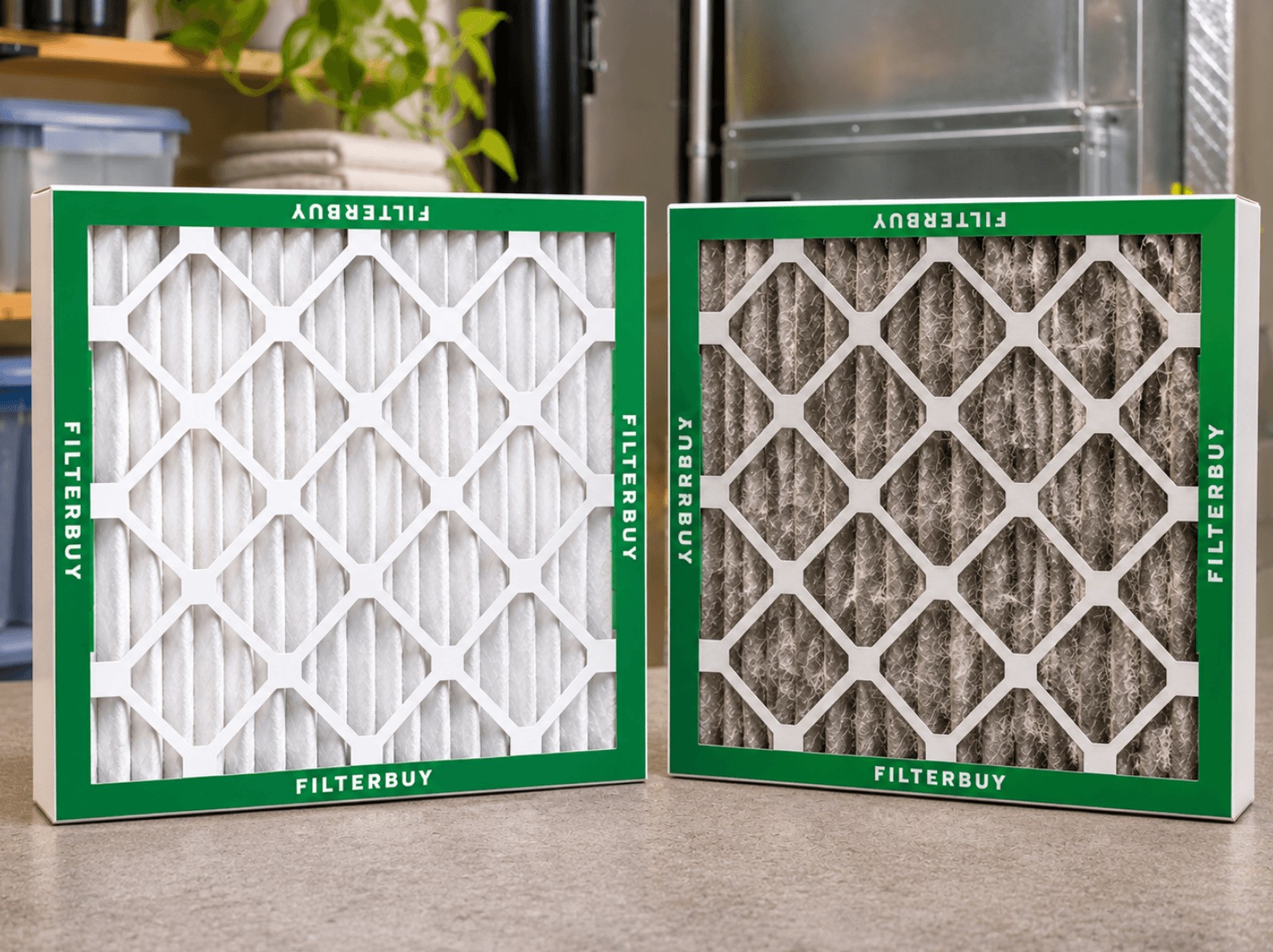
With shedding pets, change a 17x17x4 filter about every 60 days. Hair mats across the pleats and dander adds fine particles, so the media loads faster. With two large dogs or several cats, I would plan closer to 45 days.
The Asthma and Allergy Foundation of America notes that forced-air systems can spread pet allergens through a house. For bedrooms, a portable unit adds a second layer. This guide to the best air purifier for allergies and this roundup of top air purifiers compare the options.
Is 90 Days Realistic for a 4-Inch 17x17 Filter in Boca Raton?
Ninety days works for many Boca Raton homes, but here it is closer to a maximum. Air conditioning runs most of the year, and the U.S. Department of Energy notes that filters need more frequent attention when a unit runs constantly. Humidity matters too. The Florida Department of Health recommends keeping indoor humidity below 60%, and a clogged filter makes that harder by restricting airflow.
That is why I recommend splitting the year in two:
May through October: about 60 days, when cooling demand peaks.
November through April: about 90 days, if the monthly check looks clean.
The split works out to about five filters a year, compared with four on a flat 90-day schedule, six with pets, and about nine for allergy households. Buy a pack that matches your number.
17x17x4 Filter Tips for Snowbird Homes and Hurricane Season
Before Leaving a Seasonal Home
Install a fresh filter before you leave.
Keep the air conditioner running to hold humidity below 60%.
Ask your house watcher to check the filter monthly.
Replace it on your return if it has been in place more than 90 days.
During Hurricane Season (June 1 to November 30)
Keep a spare in your storm kit. Stores may be closed after a storm.
Check after cleanup. Debris and drywall dust can load a filter within days.
Inspect a soaked system first. If water reached the air handler, have it checked before restarting with a new filter.
When Should You Replace a 17x17x4 Furnace Filter Early?
Replace it early when the media looks gray, airflow weakens, or the system runs longer than usual. "Furnace filter" and "AC filter" usually mean the same part here, since one air handler serves both heating and cooling. My quickest check is the light test: hold the filter up to a window, and if the pleats block the light, it is done.
Discolored media: the pleats look gray or brown.
Weak airflow: registers push less air than after the last change.
Longer run cycles: the system struggles on ordinary days.
More dust indoors: if dust returns soon after a change, dirty ducts may be the cause, and professional vent cleaning can help.
Why Does a 17x17x4 Filter Get Dirty So Fast?
A filter that turns gray in weeks usually points to a problem upstream. The EPA notes that filters only clean air while the system runs, so anything that adds runtime or dust shortens the interval. This look at why a brand-new air filter gets dirty so fast covers more causes. Check these first:
Fan set to ON instead of AUTO: the blower runs around the clock.
Leaky return ducts: attic or garage returns pull in dust and insulation fibers.
Gaps around the filter: dust bypasses the media.
Renovation: sanding and drywall work load a filter in days.
Does MERV Rating Change How Often You Replace It?
Somewhat. Higher-MERV filters capture smaller particles, so they can load faster in dusty or pet-heavy homes. The EPA recommends at least MERV 13 or the highest rating your system handles. A 4-inch depth helps. The Department of Energy's Building America program reports that at 300 feet per minute, a 4-inch MERV 7 filter showed 0.12 inches of water column of resistance, compared with 0.20 for a 1-inch MERV 7 filter.
MERV 8: dust and lint.
MERV 11: pet dander and pollen, as this MERV 11 filter overview explains.
MERV 13: the finest particles, including smoke, which can drift far from its source, as this wildfire and smoke map shows.
My take: MERV 13 earns its place in allergy and asthma households, and a 4-inch frame is the best place to run it.
How to Replace a 17x17x4 Air Filter
Turn the system off at the thermostat.
Slide out the old filter and confirm the size on its frame.
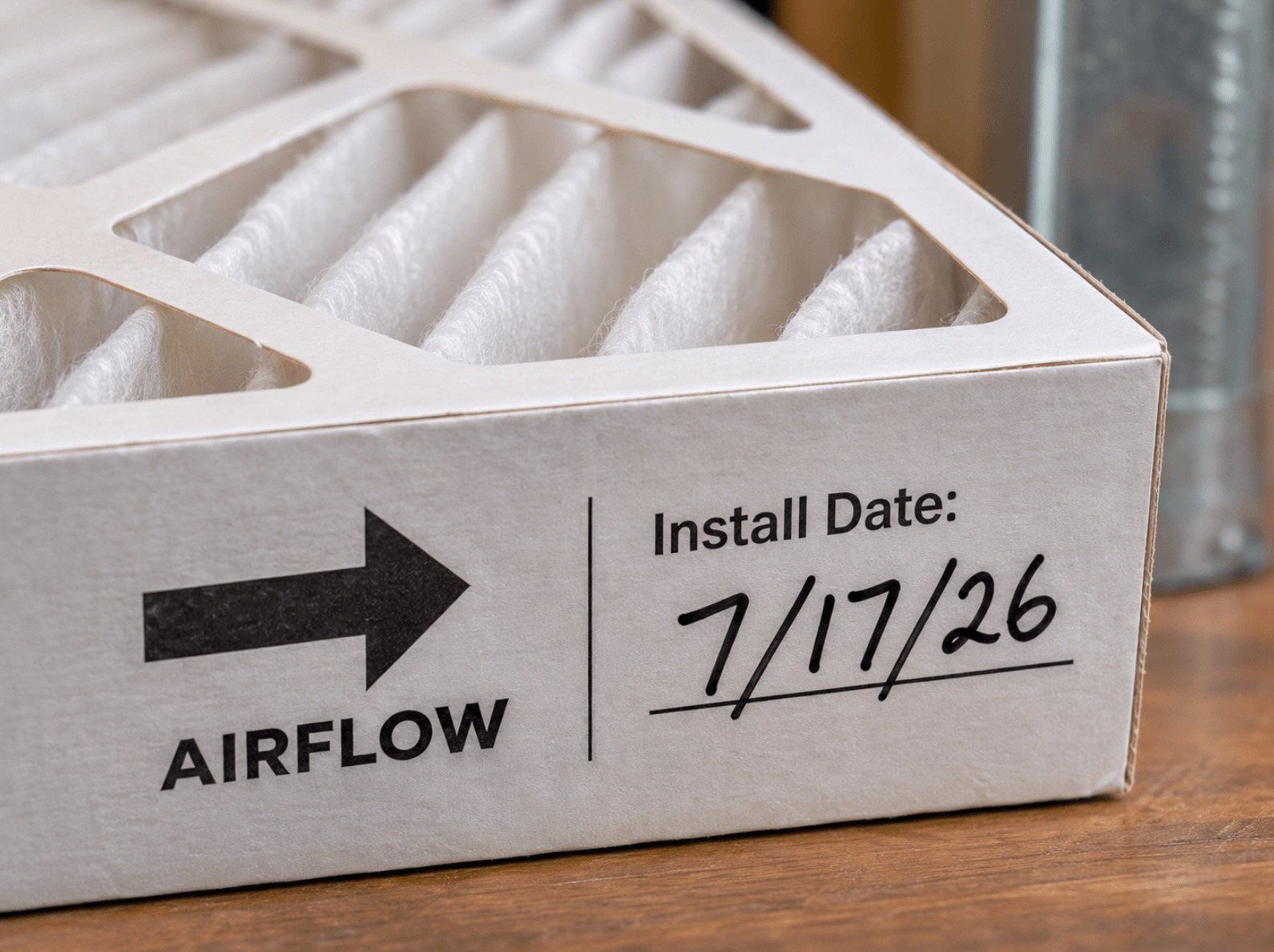
Point the new filter's airflow arrow toward the air handler.
Seat it snugly with no gaps around the edges.
Write the date on the frame and turn the system back on.
Essential Resources: 7 Trusted Sources for Choosing and Maintaining a 17x17x4 Filter
1. Compare MERV 8, 11, and 13 Options in the Exact 17x17x4 Size
See all three ratings in this size, plus pack options and replacement guidance.
Source: Filterbuy 17x17x4 Air Filters: https://filterbuy.com/air-filters/17x17x4/
2. Pick the Right MERV Rating for Your Household
The EPA explains how MERV ranks filters by particle capture.
Source: U.S. EPA, What Is a MERV Rating? https://www.epa.gov/indoor-air-quality-iaq/what-merv-rating-1
3. Follow Industry Best Practices for Home Filtration
The National Air Filtration Association publishes a residential filtration guideline.
Source: National Air Filtration Association: https://www.nafahq.org/residential/
4. Build a Monthly Filter Check Into Your Maintenance Routine
ENERGY STAR recommends inspecting filters every month.
Source: ENERGY STAR Maintenance Checklist: https://www.energystar.gov/saveathome/heating-cooling/maintenance-checklist
5. Know Which Indoor Triggers Call for Better Filtration
The NHLBI lists dust mites, mold, and pet dander as indoor asthma triggers.
Source: National Heart, Lung, and Blood Institute: https://www.nhlbi.nih.gov/health/asthma/causes
6. Keep South Florida Humidity and Mold in Check
The CDC covers indoor humidity targets and moisture control.
Source: CDC, About Mold and Your Health: https://www.cdc.gov/mold-health/about/index.html
7. See Why Boca Raton Systems Load Filters Faster
National Weather Service data shows South Florida's long, hot cooling season.
Source: National Weather Service Miami: https://www.weather.gov/mfl/climate
Supporting Statistics: The Research Behind a Shorter Filter Schedule in South Florida
1. Air Conditioning Uses 19% of Home Electricity
About 89% of U.S. homes used air conditioning in 2020, and cooling is the largest single use of home electricity.
Source: U.S. Energy Information Administration: https://www.eia.gov/energyexplained/use-of-energy/electricity-use-in-homes.php
2. Florida Has Warmed More Than 2°F Since 1900
2015 to 2024 was the state's warmest decade on record, which means longer cooling runtimes.
Source: 2025 State Climate Summaries (NCICS, NOAA NCEI data): https://statesummaries.ncics.org/chapter/fl/
3. Nearly 28 Million Americans Have Asthma
That is about 8 in 100 people, a strong case for a six-week schedule in asthma households.
Source: Asthma and Allergy Foundation of America: https://aafa.org/asthma-facts/
Final Thoughts and Opinion
My Take: Treat It Like a Gauge, Not a Calendar
The 90-day number gets read as a promise. I think a better approach is to check a new filter at 30 days, note how dirty it looks, and set your interval from what you see. In Boca Raton, expect it to run shorter in July than in January. For more homeowner ideas, see this air filter tips blog.
Next Steps
Confirm your size. Read the frame label or measure the slot.
Pick a MERV rating. Match it to your household and system.
Set your interval. Start with the seasonal schedule above.
Date the frame. Check it again at 30 days.
Keep a spare. Options include a 17x17x4 MERV 8 two-pack at Home Depot, a MERV 11 two-pack at Target, or filters ordered online through Amazon.
Book a yearly tune-up. If replacement comes up, compare furnace and HVAC replacement options and your HVAC funding and installation options.
Frequently Asked Questions
Can I Vacuum or Wash a 17x17x4 Pleated Filter?
No. Disposable pleated filters are built for one use. Cleaning can bend the pleats, and a damp filter can grow mold.
Can I Leave a 4-Inch Filter in for Six Months?
Rarely in Boca Raton, where the air conditioner runs most of the year. Other 4-inch sizes, such as a 15x20x4 filter or an 18x24x4 MERV 8 filter, follow the same rule.
Is a 17x17x4 Filter Interchangeable With a 17x17x1?
No. A filter cabinet is built for one depth, and a 1-inch filter in a 4-inch slot lets air bypass the media.
Set Your 17x17x4 Filter Schedule
Pick an interval that matches your household, then let a monthly check confirm it. Write today's date on the frame so the first check is easy to time.
Glossary
Filterbuy: A U.S. air filter manufacturer that makes the 17x17x4 in MERV 8, 11, and 13, along with other HVAC and furnace filter sizes.
Air filter: A device made of fibrous or porous material that removes particles from moving air. See this general background on air filters.
Nominal size: The rounded label size used for ordering, as opposed to the measured frame.
MERV: Minimum Efficiency Reporting Value, a 1-to-16 rating defined by ASHRAE Standard 52.2 for how well a filter captures particles.
Air handler: The indoor unit with the blower and evaporator coil that moves air through the filter.
Learn more about HVAC Care from one of our HVAC solutions branches…
Filterbuy HVAC Solutions - West Palm Beach FL
1655 Palm Beach Lakes Blvd., Ste 1005 West Palm Beach, FL 33401
(561) 448-3760
https://maps.app.goo.gl/VarpgNZnxuPQuW8A7
